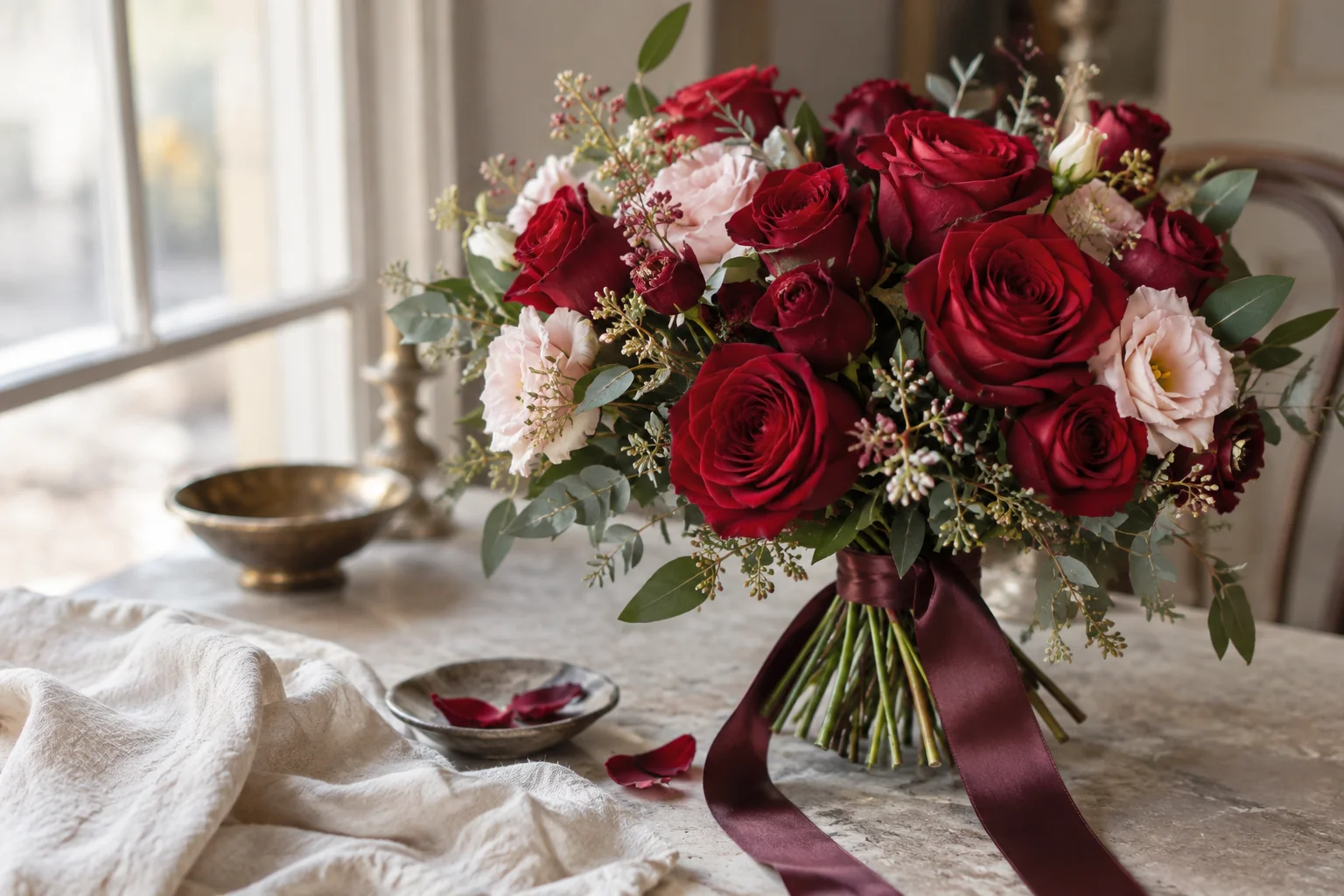
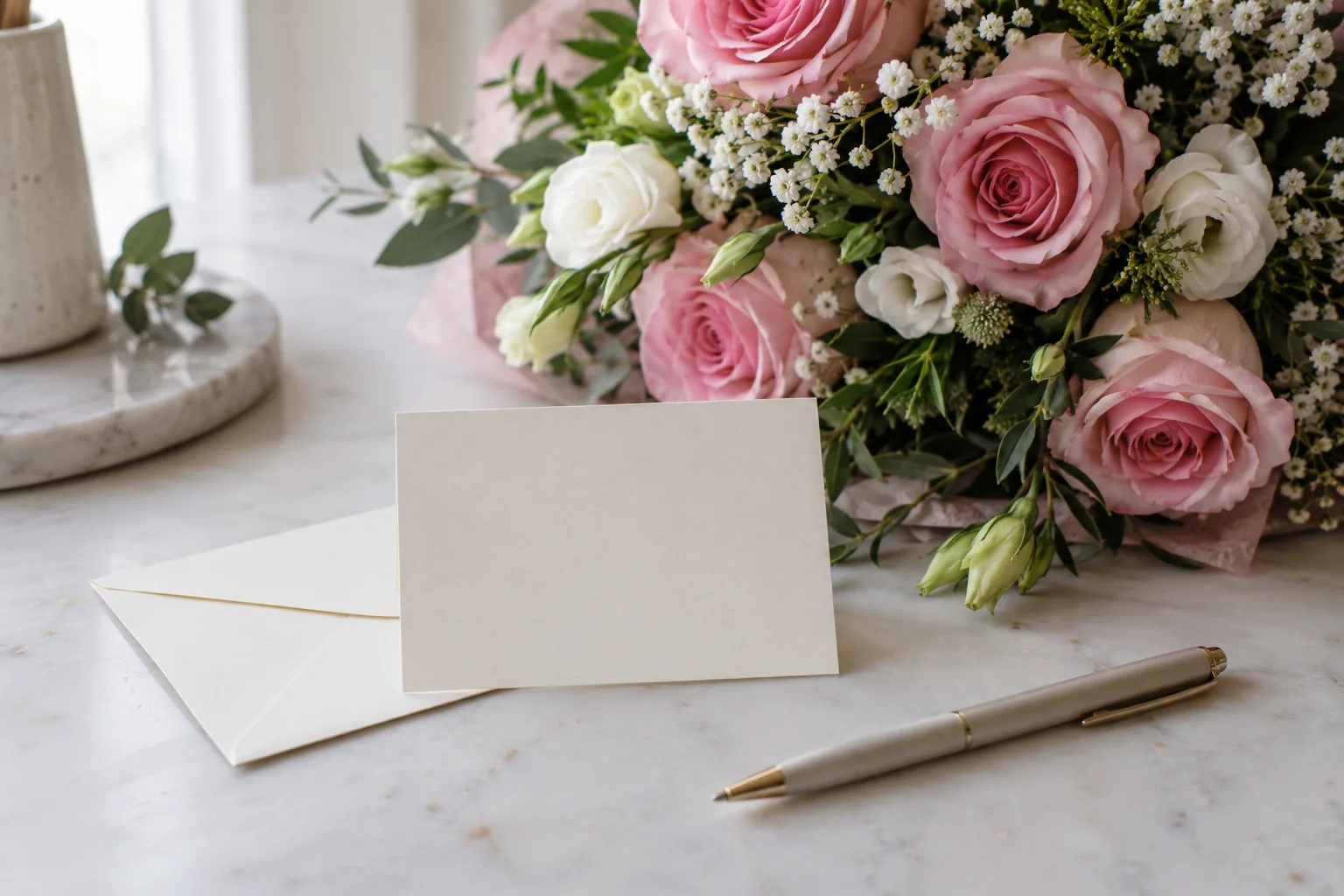
A flower card explains the thought behind the bouquet. It does not need to be long or formal: a line that sounds like you is often more effective than a quotation. Start with the occasion, add one personal detail and finish with a recognisable signature. Use these original examples as starting points.
Birthdays and friendship
“Wishing you a year full of good surprises and more of the things you love.” For a friend: “A little colour until our next catch-up and our next round of laughter.” If you include a private joke, make sure it will feel welcome when the message is read.
Love and anniversaries
“My favourite place is still beside you.” Or: “Another year of us, with so much still to discover together.” Mentioning a shared day or place can make even a short message personal. You do not need to borrow grand promises that you would never say in conversation.
Thanks and congratulations
“Thank you for being there when I needed you.” For an achievement: “You worked hard for this, and I am so happy to celebrate you.” Name the kindness or milestone when you can, but avoid including private details that you would not want someone else to read.
A new baby or a sympathy message
For new parents: “A warm welcome to your little one and love to the whole family.” For a bereavement: “Thinking of you with heartfelt sympathy.” In sensitive moments, simple, considerate words are usually more useful than advice, jokes or explanations.
Check the signature and wording
Review names, spelling and punctuation before confirming. Follow the character limit shown in the order form and check the signature option: an anonymous gift may make the message less clear. With thank you flowers, for example, the recipient should know whose appreciation they are receiving. A name and one sincere detail complete the gesture.