The most useful way to care for cut flowers is to follow a simple, consistent routine. No single vase-life promise applies to every bouquet: flower variety, maturity and room conditions all matter. Start with any instructions supplied, especially when the arrangement uses a support other than a normal vase.
When the flowers arrive
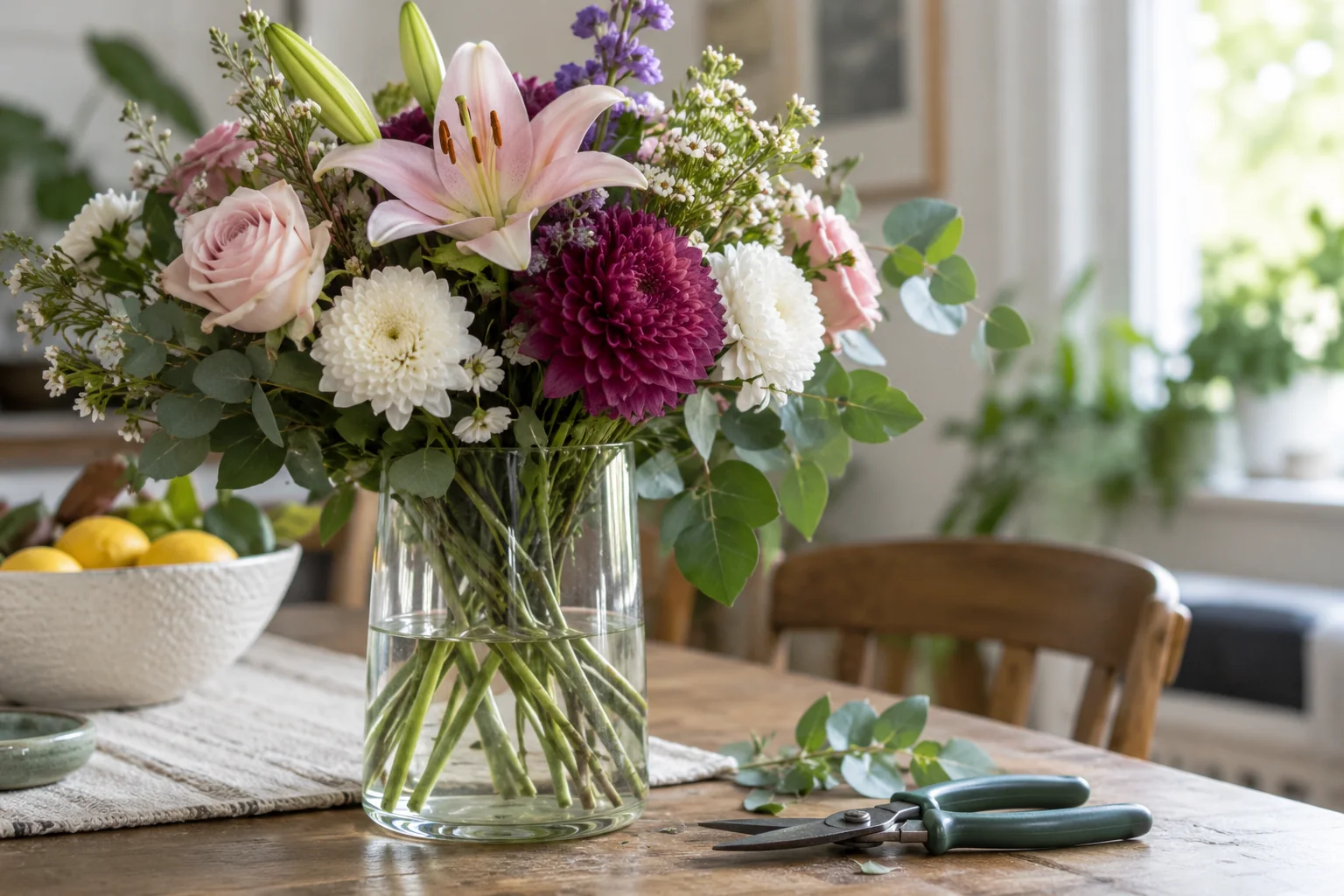
Choose a clean vase, remove leaves that would sit below the water and recut the stems with a clean, sharp tool. Place the flowers in water and use any flower food at the stated dose. These are core preparation steps in the RHS cut-flower guide.
Find the right vase
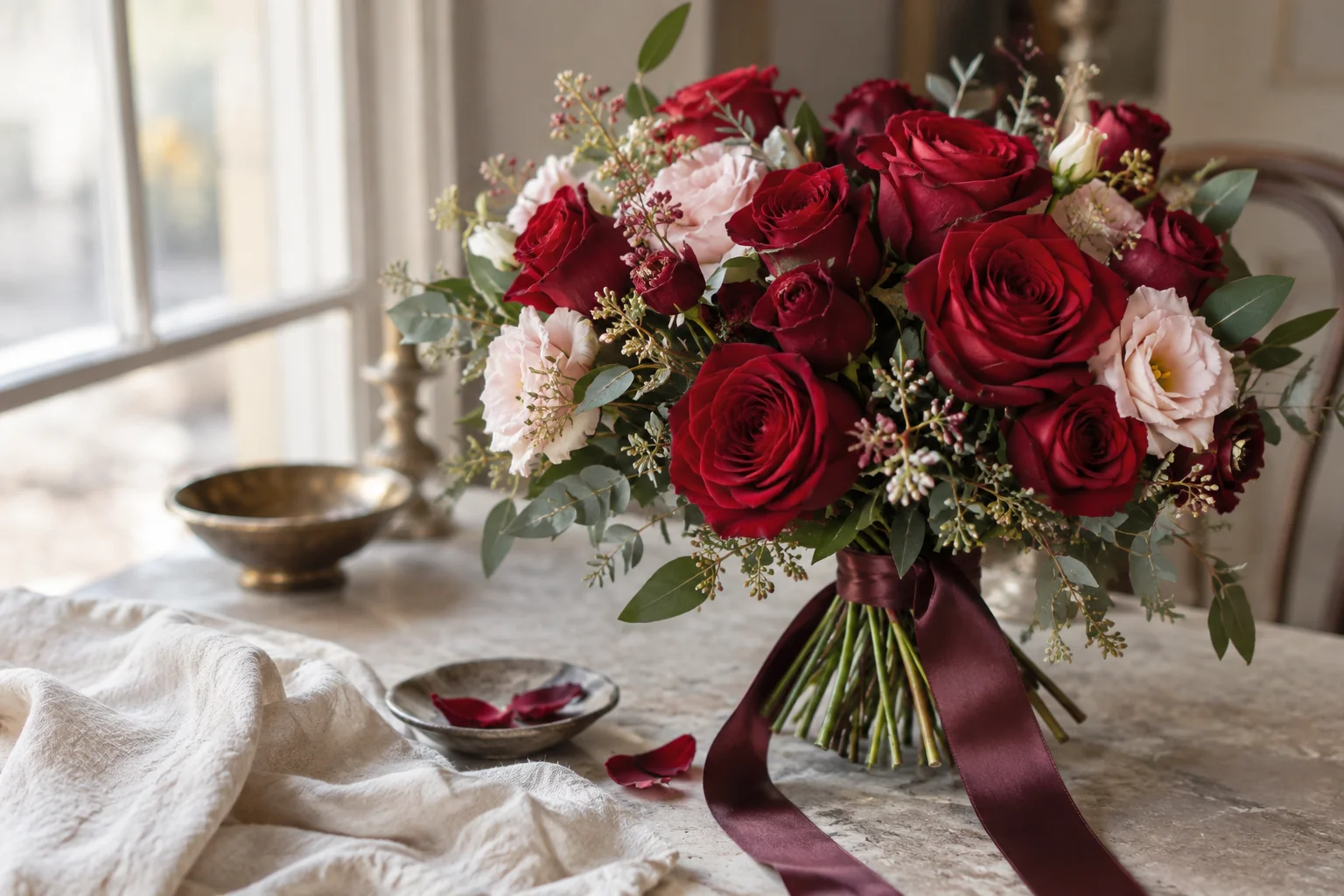
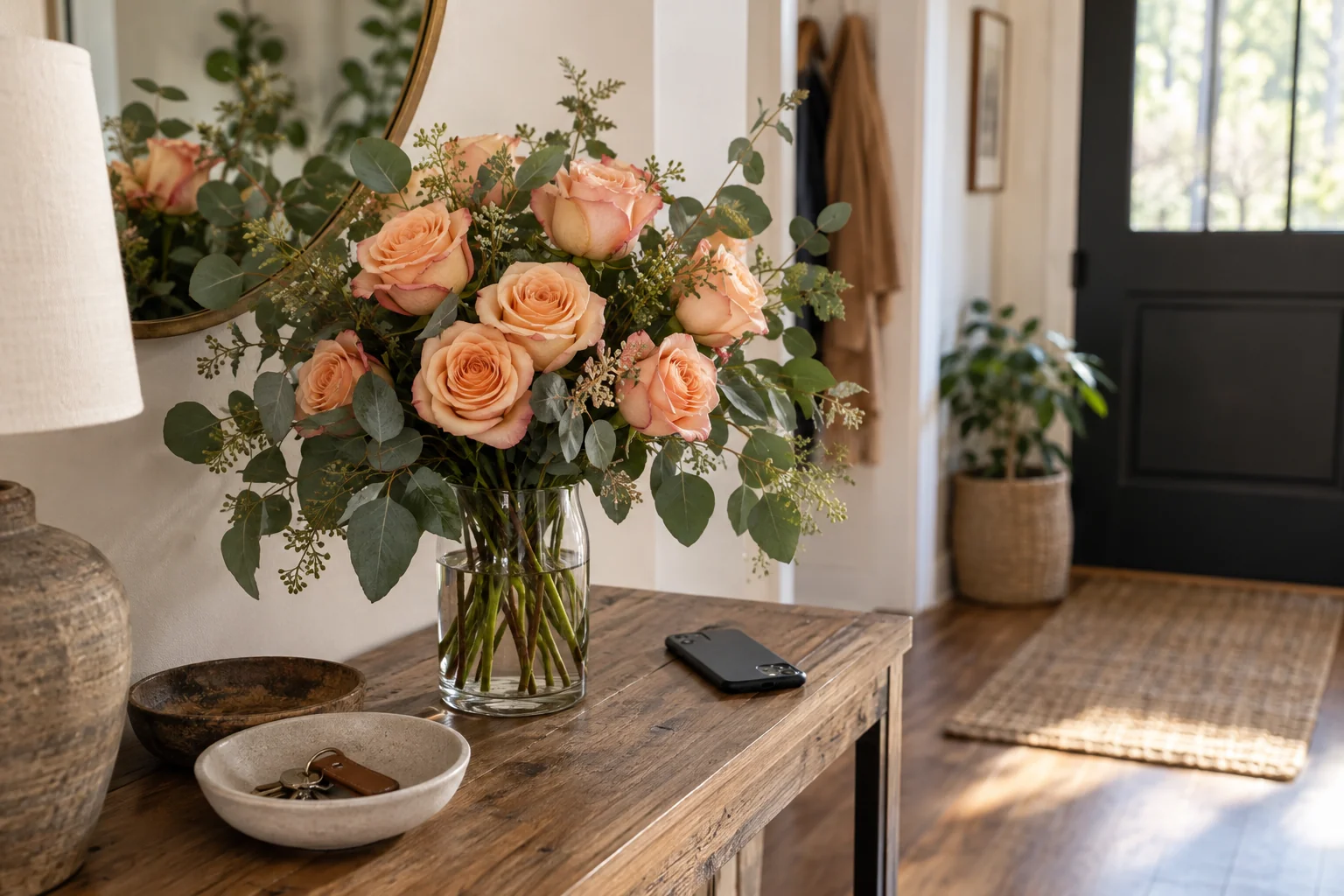
Before cutting, compare the bouquet’s height with the container. The vase should support the arrangement without squeezing the stems together. If the bouquet is tied, do not automatically remove the binding: it may help preserve the design. Ask the florist which packaging or support should stay if you are unsure.
Build an easy daily check
Look at the water level and clarity each day, replace cloudy water and follow the flower-food instructions. Keep the vase away from direct sun, heat and ripening fruit. Further practical guidance is available from Iowa State University Extension.
Let the arrangement change
Different flowers in a mixed bouquet may age at different speeds. Remove blooms that have deteriorated and rearrange the remaining flowers in a smaller vase if that suits them better. The bouquet does not have to retain its original shape throughout its life. Keep the card separately if you want a lasting reminder of the occasion.
Avoid complicated remedies
Do not add household products or improvised mixtures without reliable instructions. Use formulated flower food according to its label rather than increasing the dose. If there is a problem when the bouquet arrives, take photographs and contact customer support. Explaining when and how it was received helps them assess the issue.