Choosing seasonal flowers means taking inspiration from the time of year without confusing natural flowering with florist availability. Climate, growing location, greenhouse production and supply all affect what can be sourced. A flower may therefore appear in a catalogue beyond its outdoor flowering season.
Spring: light shapes and fresh colour
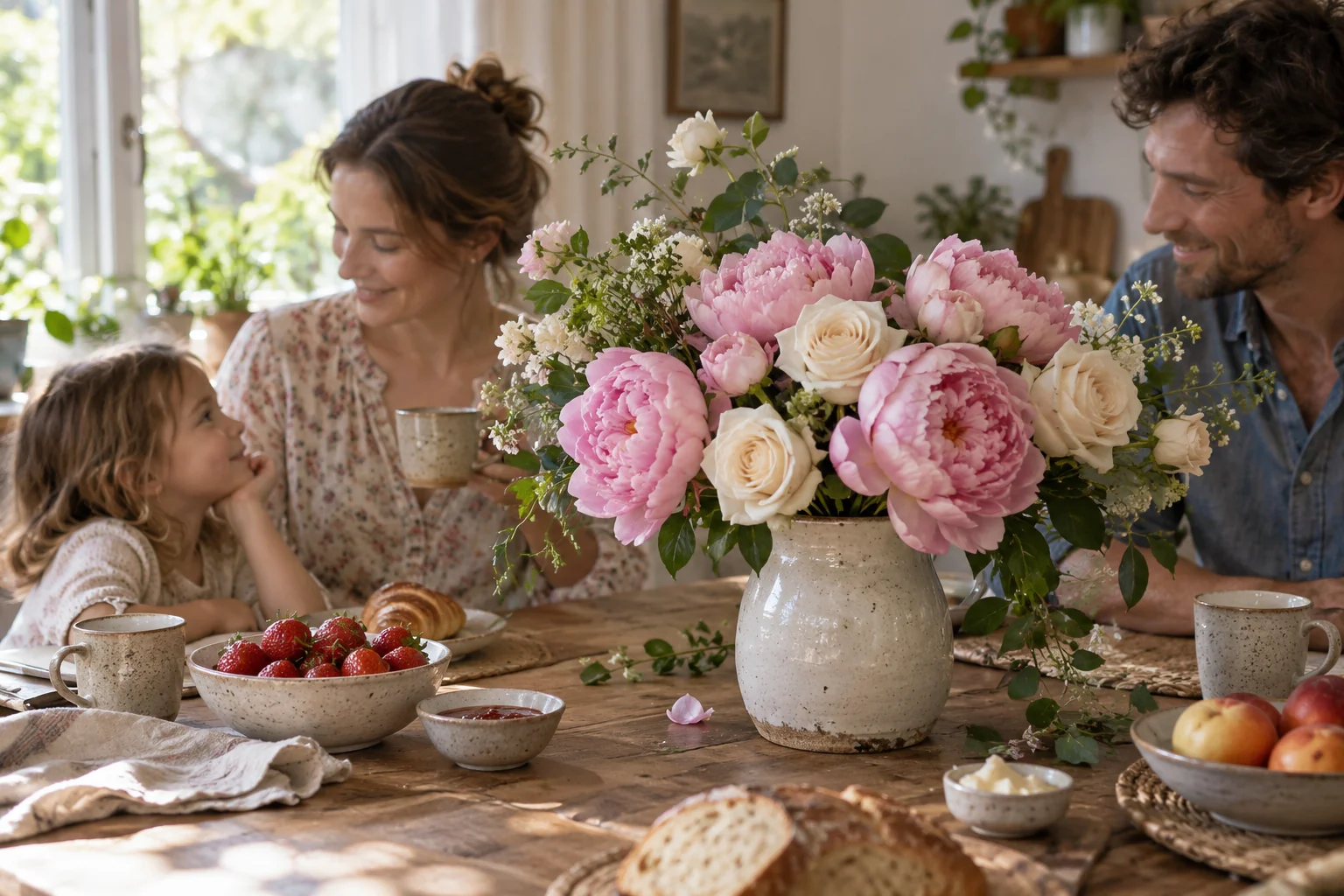
Tulips are a familiar spring inspiration, while pink, cream, yellow and lilac can create a fresh palette. Spring does not have to mean pastels, however. Stronger contrasts can work just as well in an airy arrangement. Check which varieties are actually named in the product you choose.
Summer: bright, generous bouquets
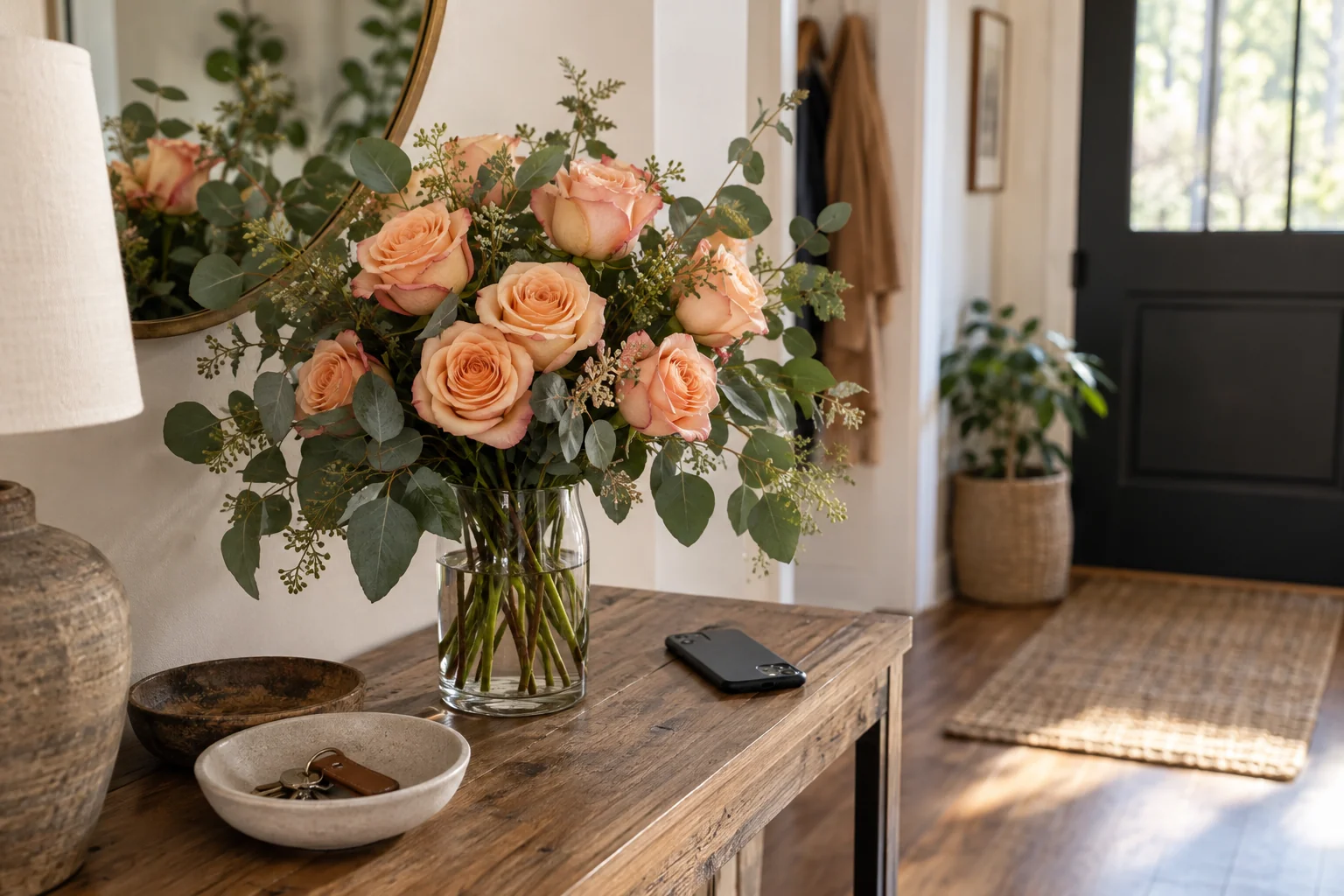
Yellow, orange and bold flower shapes readily suggest summer. Sunflowers are a natural inspiration for this look when available. For a gift during hot weather, also consider where the flowers will go: a bouquet delivered to a cool home is easier to manage than one carried around through several journeys.
Autumn: warm colours and rich forms
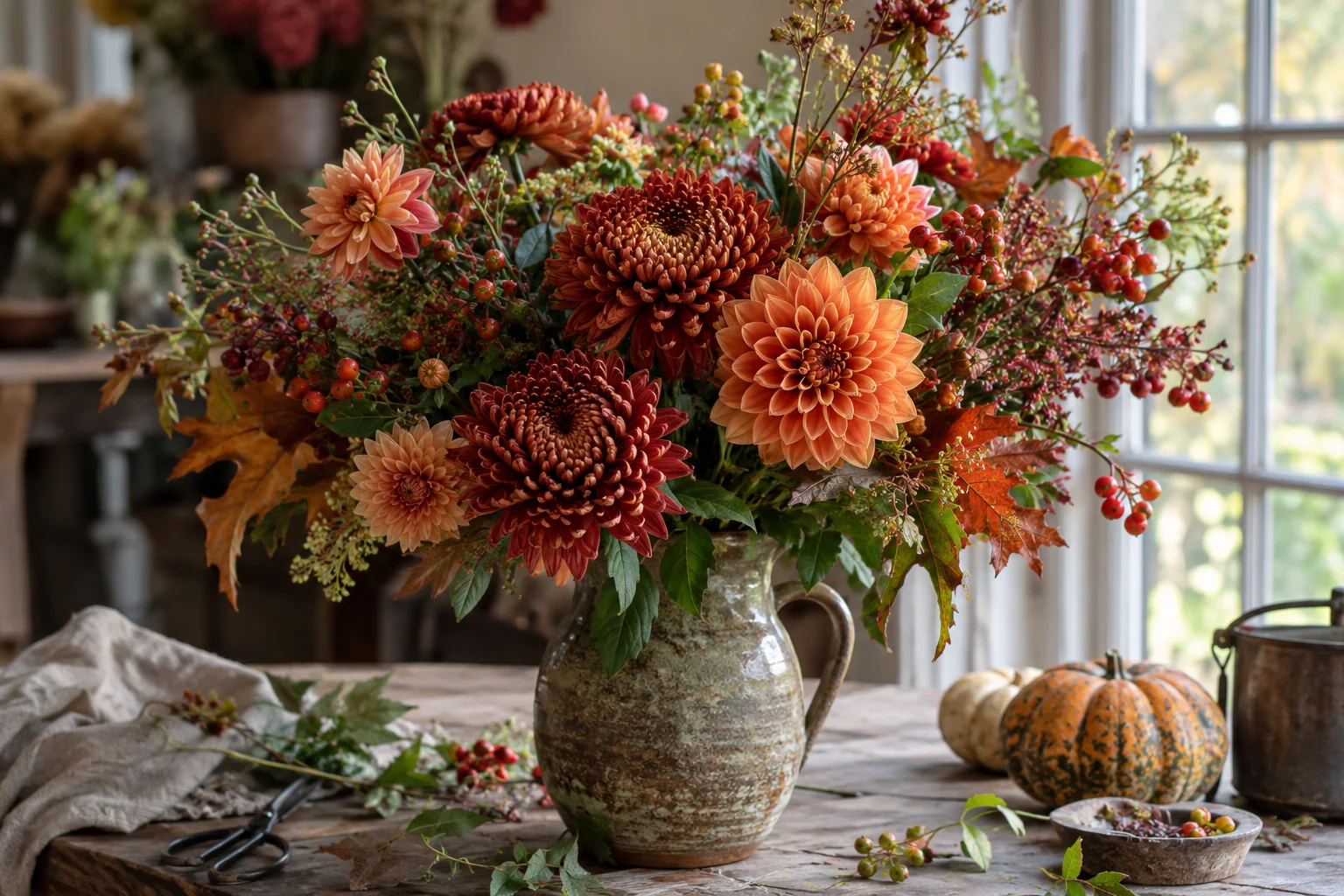
Copper, burgundy and orange create an autumnal palette. Dahlias, which can flower from summer into autumn, offer an example of a generous form, but other available flowers can create a similar mood. You do not need to insist on one variety when the overall colour and style matter most.
Winter: contrast and simplicity
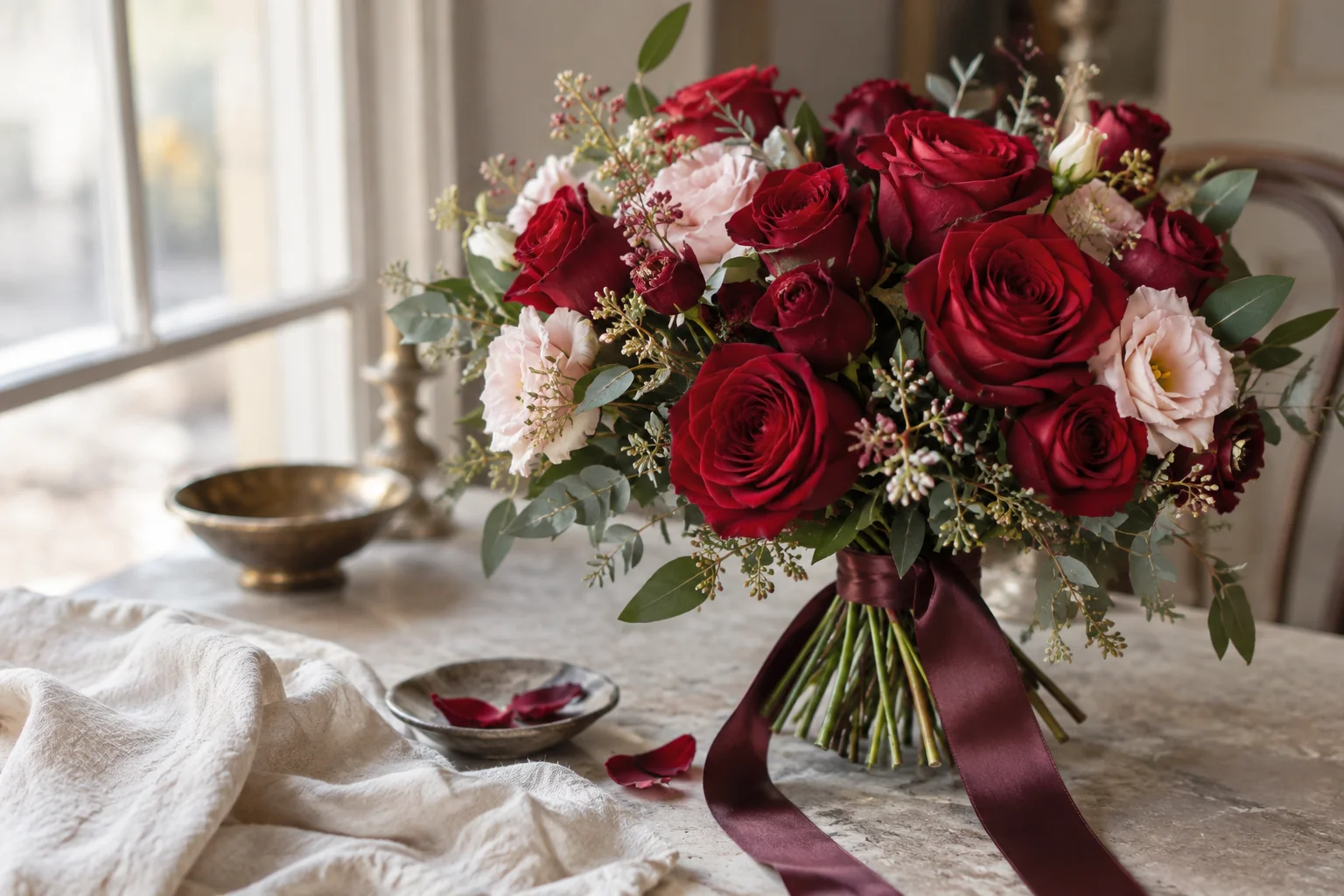
White, red and green can suggest winter or a festive occasion, but they also suit restrained arrangements. Choose from the flowers available and ask if a particular variety is essential. A winter bouquet does not automatically need a Christmas theme; the recipient and occasion still come first.
Order with some flexibility
Start with the flower and bouquet catalogue, choosing a palette, size and overall style. Product descriptions and current availability are more useful than a universal month-by-month list. For botanical flowering seasons, RHS guidance on spring bulbs and dahlias provides background, with local climate differences in mind.