Sympathy flowers express care for a grieving family. Their wishes, any instructions in the announcement and the setting should guide your choice. Before comparing colours or sizes, check whether flowers are welcome. A request for donations instead of flowers, or for no gifts, should take priority.
Understated flowers and colours
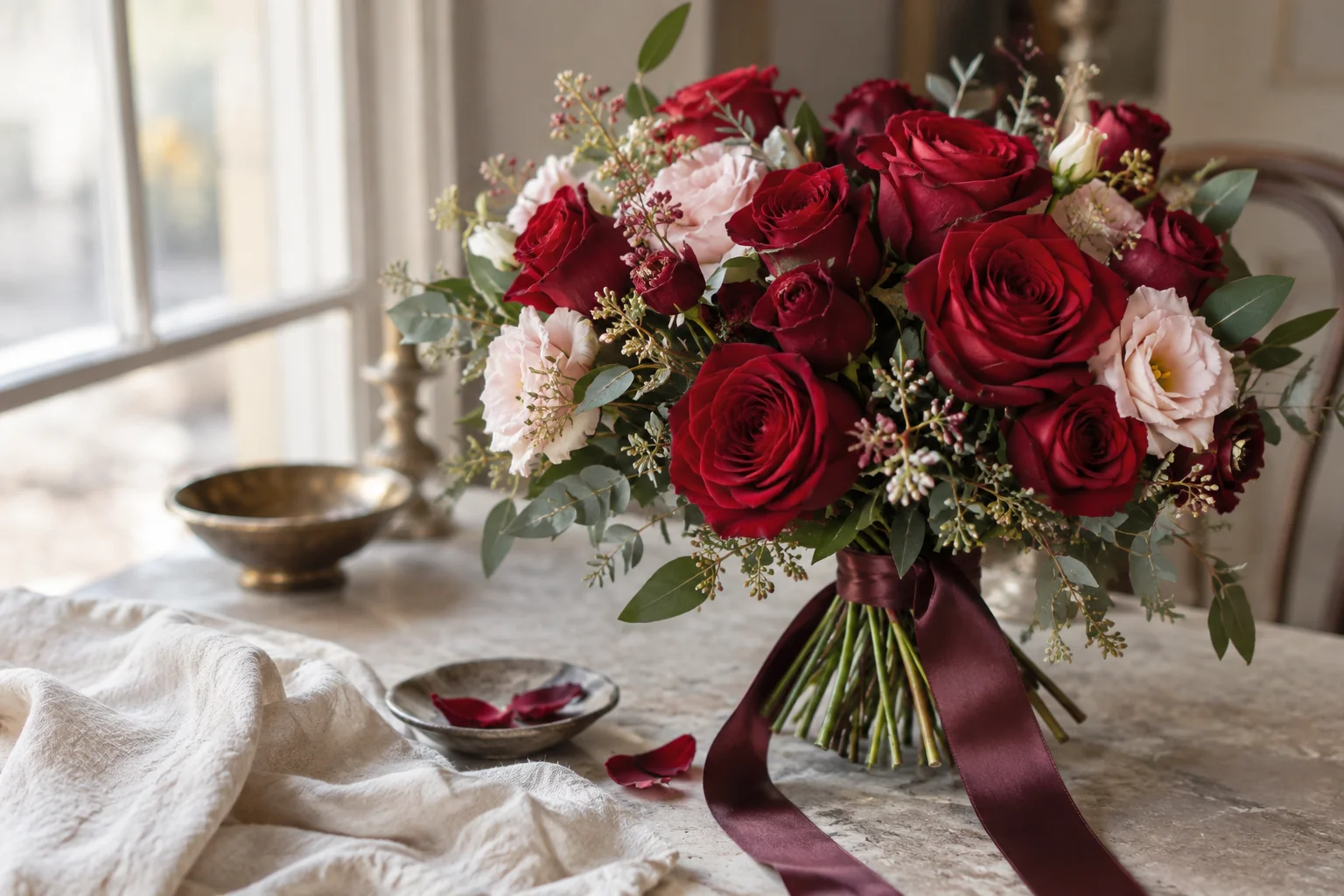
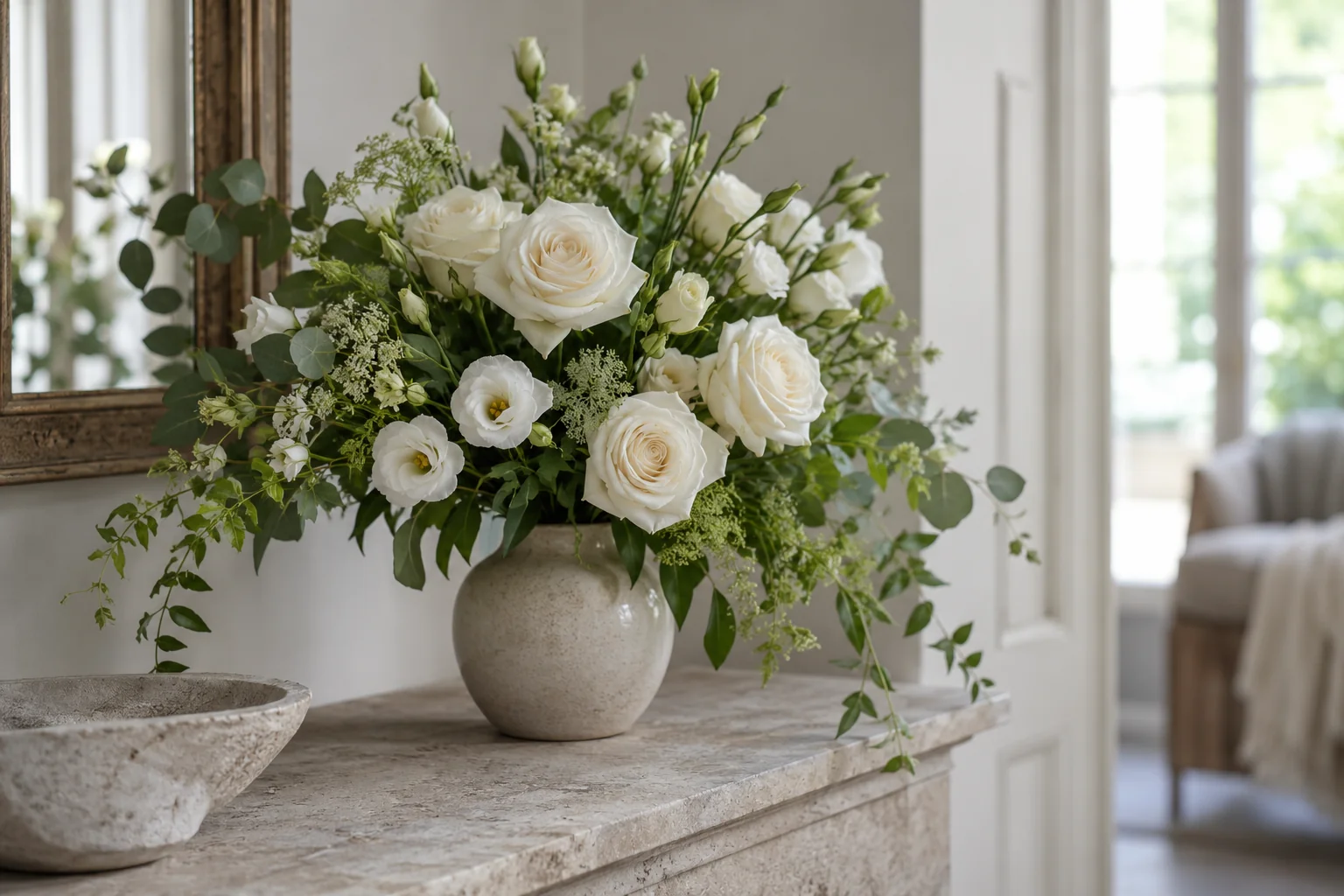
White and cream are often chosen for quiet arrangements, but they are not compulsory. A colour loved by the person who died can have personal meaning. Roses and lisianthus may form part of a suitable arrangement, depending on availability. Family, cultural and religious traditions can suggest different choices.
Home delivery and funeral arrangements differ
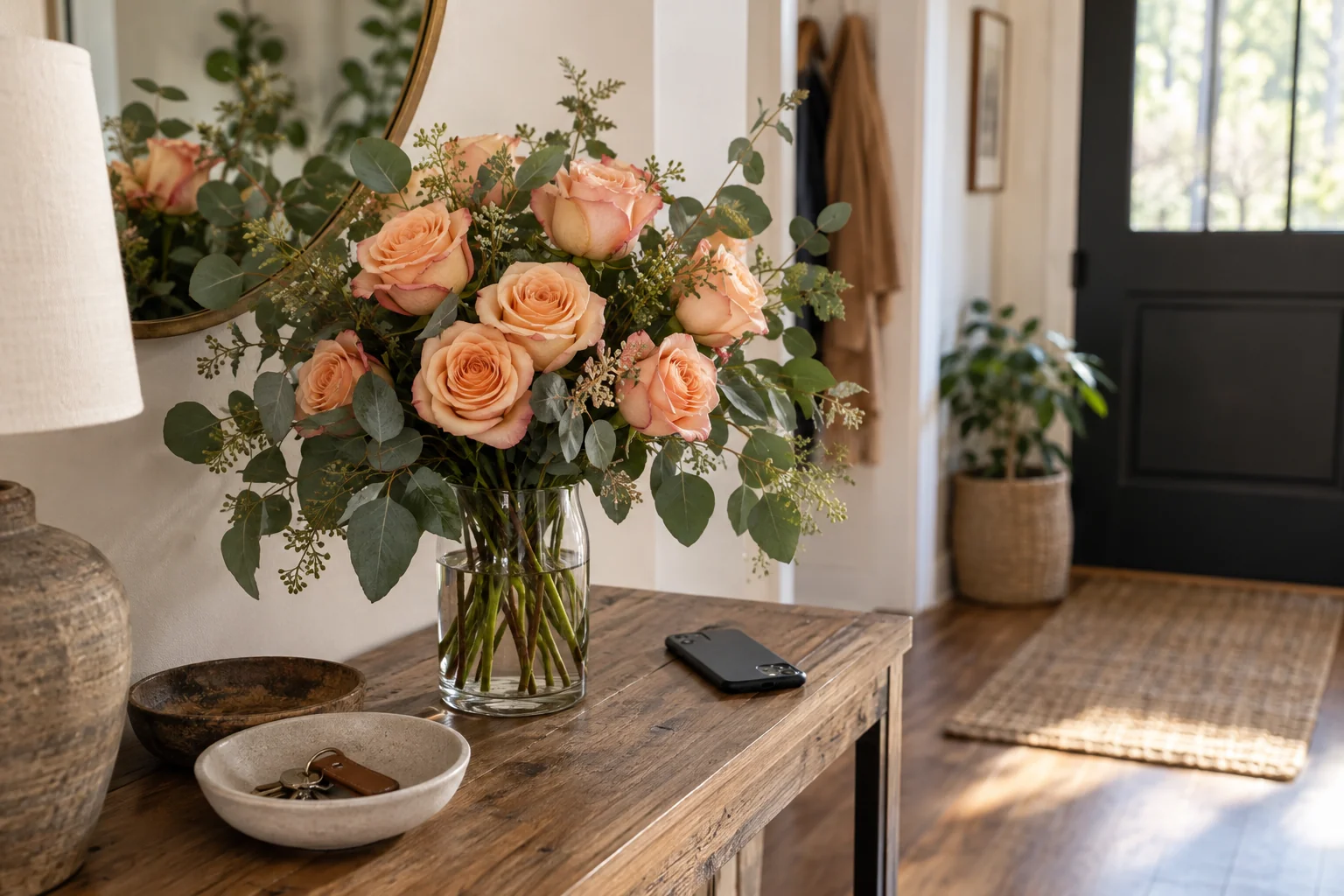
A bouquet for the family’s home serves a different purpose from flowers intended for a ceremony. At home, something easy to display may be appreciated. For a venue, confirm which arrangement types are appropriate and accepted. Do not assume a bouquet includes a wreath or a ribbon with a dedication.
Check the delivery details
If flowers must arrive before a funeral in Italy, contact customer support before ordering to discuss the deadline. Provide the correct venue, family reference and receiving information. A selectable delivery date does not automatically guarantee arrival before a particular ceremony time.
Keep the card simple
“Thinking of you and your family with heartfelt sympathy.” Or: “Sending our love and a quiet thought of support.” If you knew the person, a brief respectful memory can be meaningful. Avoid explaining the loss, minimising grief or using religious wording unless you know it will be welcome.
A discreet expression of support
Explore sympathy flowers with the recipient and delivery setting in mind. You do not need the largest arrangement to show care. A thoughtful message in the days after the funeral can also express continued support, when the first round of attention has passed.